
The Real Field of Asian Cricket: A Game Caught Between Power, Money and Politics
एशियाई क्रिकेट की असली ताकत मैदान पर नहीं, संस्थागत ढाँचे में है। तीन स्तंभ इसे नियंत्रित करते हैं: (1) आईसीसी में पूर्ण सदस्यों के मत और भारत का सबसे बड़ा राजस्व योगदान; (2) एशियाई क्रिकेट परिषद का एशिया कप, जहाँ भारत-पाक तनाव के कारण हाइब्रिड मॉडल जैसे समाधान बने; (3) फ्रेंचाइज़ी टी20 लीगों की समांतर अर्थव्यवस्था, जिसने खिलाड़ियों की आवाजाही और एनओसी को बोर्डों का सबसे बड़ा औज़ार बना दिया। इसके साथ प्रसारण अधिकारों का केंद्रीकरण, अफगानिस्तान क्रिकेट का कूटनीतिक चरित्र और महिला क्रिकेट में असमान निवेश जुड़ता है। सुधार की तीन शर्तें: पारदर्शी वित्त और अधिकार नीलामी, सबके लिए संतुलित वार्षिक कैलेंडर, और महिला क्रिकेट तथा एसोसिएट देशों में निवेश का पुनर्वितरण।
The Game Beyond the Scorecard
Cricket is usually understood through the scorecard — how many runs, how many wickets, who won. But in Asia, the most decisive part of the game is settled off the field: in ICC board rooms, in broadcast rights auctions, in votes on Asian Cricket Council proposals, and in the diplomatic tension that can cancel a tour at the last minute. Asia is the largest market in world cricket and, at the same time, its most complex political unit.
Within a single region sit countries with suspended trade, tense borders, and a shared wait for the same ball in the same tournament. That contradiction is the architecture of Asian cricket. The second defining feature is India's commercial gravity: the largest share of global cricket revenue originates in the Indian market, and that share translates directly into the heaviest voice in decision-making.
The third feature is sharp inequality. On one side are boards signing multi-billion contracts; on the other are member nations whose entire annual budget is smaller than the broadcast fee for a single season of one major T20 league. Inside that inequality, it is decided who plays where, who gets how much, and whose voice is heard.
Asia's Weight Inside the ICC
The ICC's structure places real power with the directors of full-member boards. From Asia, India, Pakistan, Sri Lanka, Bangladesh and Afghanistan hold full membership, and each vote shapes the future of any proposal. But counting votes is not the same as counting influence. The board contributing the most revenue tends to shape the priorities of others — whether the question is the future tours calendar or the division of broadcast money.
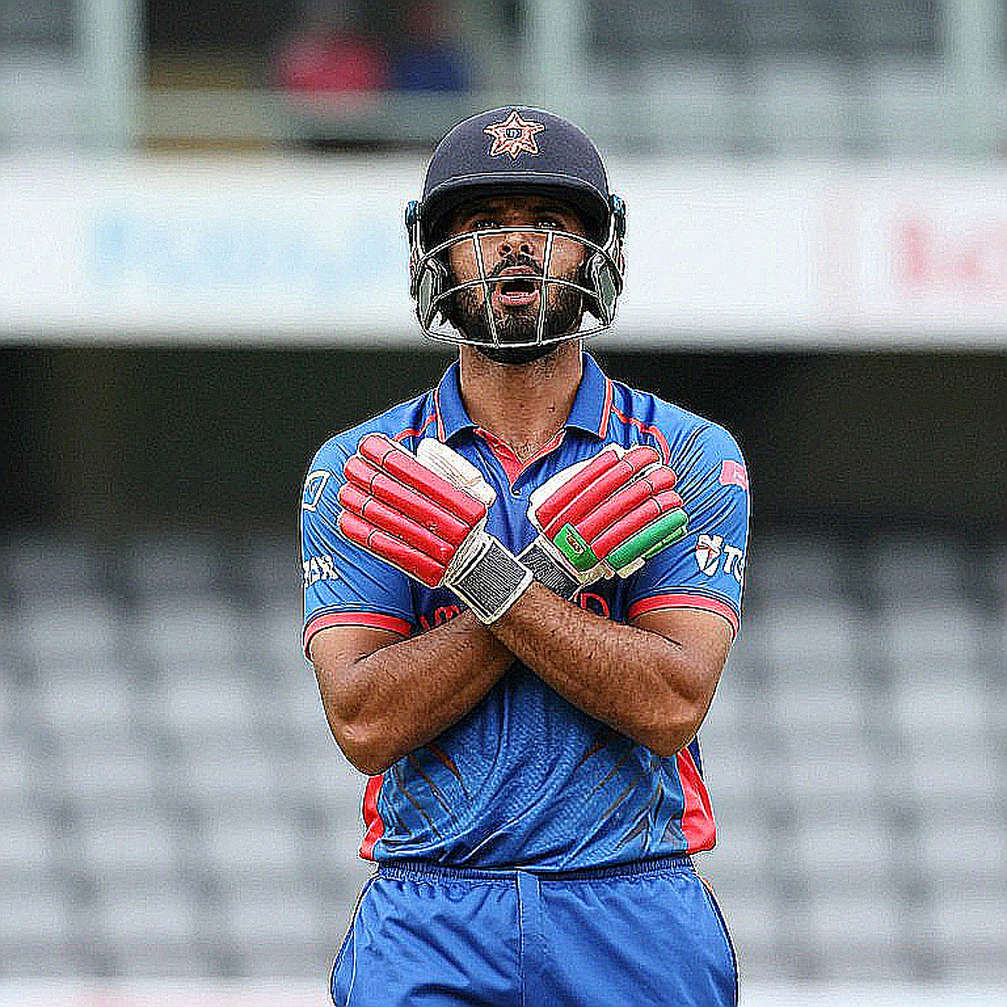
The oldest manoeuvre in Asian cricket appears in decisions taken on shared platforms. One country claims hosting rights, another refuses to accept that host, and a third brokers a compromise. The format itself then changes: instead of a single host, matches are split across countries so that every party can save face.
The effect lands directly on the game. Travel loads increase, preparation days shrink, and players must adapt repeatedly to different conditions. For associate members the cost is even higher — they must fund their own travel while finding calendar space that suits the big boards. ICC development funds are limited, and the number of claimants keeps rising.
The Commercial Gravity of the Indian Board
India's cricket economy now shapes the entire global calendar, well beyond any single series. The IPL's marketing window is protected space in the international schedule, and that window is the single biggest obstacle for every other domestic league. When Indian player availability and overseas participation are fixed to the same period, other boards have very little room to attract the best foreign names.
A less visible aspect of this gravity is workload management. The year for top players is now divided into three parts — bilateral series, franchise leagues, and ICC events. Balancing them falls hardest on the boards with the most matches to play. That is why rest and rotation become a debate every season, and why the debate always ends up being about management rather than cricket.
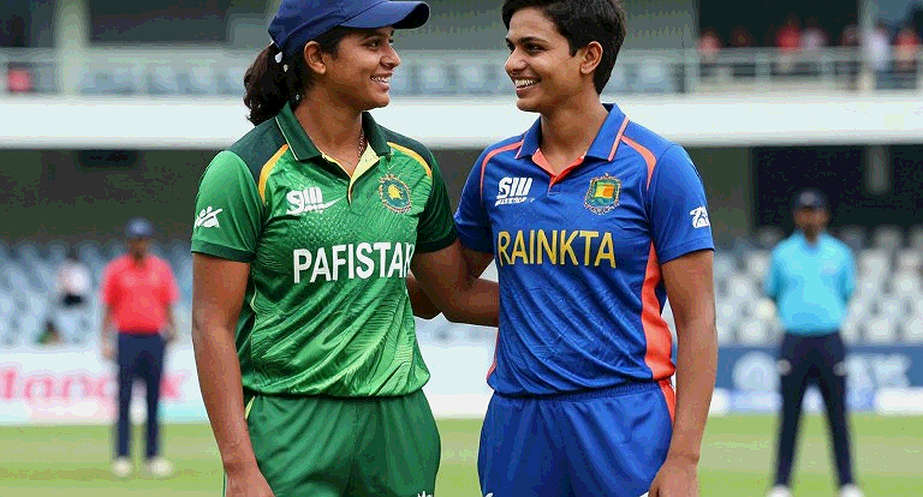
At the domestic level, the Indian board's investment has become a model: a national academy, financial transfers to state associations, and a separate league for women's cricket. Other Asian boards watch these moves but rarely have the resources to match them. The popularity of names like Rohit Sharma and Virat Kohli is itself a product of this system — stardom manufactured through market and media rights, which then sets the price of future contracts.
The Asia Cup and the ACC: Conflict, Institutionalised
The Asia Cup, run by the Asian Cricket Council, is the clearest symbol of this structure. It is a small tournament in sporting terms but the most sensitive in political terms, because it brings together teams that do not meet in bilateral series. In the 2026 edition, a dispute over hosting produced what is now called the hybrid model — one host on paper, most matches in another country.
The hybrid model can be read two ways. As a practical fix: better to play on neutral ground than to cancel. As institutional acceptance of crisis: a framework in which political disagreement is never resolved, only built around. Ticketing, broadcast and sponsorship numbers do not stay neutral about which country is hosting.
The real test for the ACC is how much autonomy it retains. Its revenue sources are limited and its members' interests collide. The country with the largest broadcast market will not press hard on hosting, so the calendar takes shape accordingly. The Asia Cup is therefore not merely an administrative platform; it is where regional politics is converted into playing regulations.

The T20 League Economy and Player Movement
The biggest structural change of the past decade is the rise of franchise leagues. After the IPL came the Pakistan Super League, Bangladesh Premier League, Lanka Premier League, ILT20 in the UAE, and Nepal's own league. This ecosystem now runs as a parallel economy alongside the international calendar. Players no longer compete only for country; they compete for contract windows, and are valued accordingly.
This increases participation for smaller boards but also their dependence. When players from Sri Lanka or Bangladesh appear in overseas leagues, they gain experience — but control over their availability slips from the home board. The No Objection Certificate becomes the most powerful tool a board holds, and it is sometimes used against a player's own wishes.
Cross-border franchise ownership adds another dimension. A company from one country can own teams in several leagues, managing brand, fans and broadcast rights together. Careers like Rashid Khan's and Wanindu Hasaranga's illustrate this multi-league system: several jerseys in one year, with success measured differently in each place. Names like Babar Azam show that a domestic league's popularity remains tied to national team performance, even as its economic base sits in the international market.
Broadcast Rights: The New Geography of Media Money
Cricket's money comes first from broadcast rights, and in Asia this market works differently from the rest of the world. The Indian board's media rights auction ranks among the largest sports contracts globally, and its effect reaches the pricing of Asia Cup and ICC events. When the biggest market sits in one country, the tournament format, match timings and even venues begin to follow that market.
The rise of streaming has split the market in two — traditional television and online. Large boards can sign separate deals for each; smaller boards must sell bundled packages, often cheaply. Piracy then cuts into revenue across the region and puts direct pressure on contract values.
The least discussed aspect is how rights allocation becomes entangled with diplomacy. The broadcaster in the host country is more likely to win rights, and when matches move to neutral venues the equation shifts again. That is why, under the hybrid model, not only the cricket changes — the flow of money changes direction too.
Afghanistan: Cricket as Diplomacy
Afghanistan's rise to full membership and beyond is Asian cricket's most extraordinary story. A team that emerged from refugee camps reached the edge of a World Cup within a few years and beat major sides. That is a sporting achievement, but its context is political: for a war-scarred country, cricket became the strongest instrument of international recognition and identity.
The harder layer of that political character is women's cricket. After the change of power, Afghan women's participation in sport was barred, and pressure built on the ICC to act in line with its own policy. Funding questions followed, and the Afghan board had to look abroad for a home base. Matches played in the UAE and India made the dilemma clearer still.
Afghan cricket now runs on broken geography. Players are identified less by province than by franchise contracts, and Rashid Khan is the largest symbol of that. But behind the symbolism sits a question: can a nation sustain international cricket when its domestic structure is not stable inside its own borders? That answer remains open.
Women's Cricket and the Question of Resource Distribution
Women's cricket is the fastest-changing part of Asian cricket. India announced equal match fees for its women players, the Women's Premier League launched, and the Women's Asia Cup became a fixture. Sri Lanka, Bangladesh, Pakistan and Nepal have all established themselves internationally.
But this expansion has come at the cost of basic infrastructure. In many countries, the number of women's matches, access to grounds and coaching staff remain far below the men's game. Where one board can hand out large women's league contracts, another struggles to schedule practice days for its national team. That imbalance shows up in international results.
The popularity of players like Smriti Mandhana proves the market is ready. The question is not whether there is an audience; it is whether investment will ever be shared proportionally. As long as broadcast and sponsorship structures are built around men's cricket, the ceiling on growth stays where it is.
The Associates and the Next Stage
A large part of Asia consists of countries without full membership where cricket is growing fast. Nepal, Oman, the UAE, Malaysia, Singapore and Hong Kong now appear regularly in global qualifiers. Their money and audiences are limited, but their utility to tournament formats is high.
That is why the qualifier format is debated before every major event. More teams means higher costs; fewer teams weakens the development claim. The dilemma has never been solved financially — only balanced by tweaking formats.
The most practical route for these nations is to build experience and revenue through franchise leagues, and they are moving that way. The risk is dependence: if the entire structure hangs on an external league, nothing will be left for domestic competition. Sustainable growth requires that a share of revenue be invested locally.
Conclusion: Three Conditions for Reform
First, transparency. Broadcast auctions, calendar decisions and revenue distribution formulas should be public. As long as these are decided behind closed doors, every decision will carry the suspicion of politics, however technically sound it may be.
Second, a balanced calendar. If the annual schedule is built around one market, smaller boards will remain on the margins. Clear, universally valid windows are needed between bilateral series, franchise leagues and ICC events.
Third, redistribution of investment — especially in women's cricket and among associate nations. Asian cricket has proved that talent exists everywhere; what is missing is the stage. As long as access to that stage is priced, the map of the game will stay the same: some teams always play at home, others always travel.