
F1 2026: A New Regulatory Architecture, the New Politics of Energy Management, and the Uncertainty of Competitive Rebalancing
फ़ॉर्मूला 1 का 2026 सत्र तीन बड़े बदलाव एक साथ लाता है: सक्रिय एयरोडायनामिक्स (उच्च-डाउनफोर्स और कम-ड्रैग अवस्थाएँ), पावर यूनिट में लगभग 400 किलोवाट इंजन और 350 किलोवाट विद्युत शक्ति का संतुलन जिसमें एमजीयू-एच हटा दिया गया है, और 100 प्रतिशत टिकाऊ ईंधन। लक्ष्य है डाउनफोर्स में लगभग 30 प्रतिशत और कम-ड्रैग अवस्था में ड्रैग में 55 प्रतिशत तक कमी, साथ ही न्यूनतम भार में लगभग 30 किलोग्राम की कटौती। निर्माताओं का नक्शा भी बदल रहा है — ऑडी सॉबर के साथ, होंडा एस्टन मार्टिन के साथ, अल्पाइन ग्राहक पावर यूनिट पर, और कैडिलैक ग्यारहवीं टीम के रूप में सर्जियो पेरेज़ और वाल्टेरी बोटास के साथ। मुख्य अनिश्चितता यह है कि ऊर्जा प्रबंधन और पावर यूनिट की कुशलता का लाभ किसे मिलेगा; इतिहास (2014) बताता है कि नए पावर यूनिट चक्र शुरुआत में ग्रिड का अंतराल बढ़ा सकते हैं।
Every major cycle of Formula 1 technical regulations arrives with a single question: will it bring the grid closer together, or push it further apart? The 2026 cycle is widely regarded as the most ambitious in decades, because three things are changing at once — the aerodynamic philosophy of the car, the energy balance of the power unit, and the source of the fuel. Any one of those alone is usually enough to reshuffle the order. All three changing together makes it almost certain that the opening phase of next season will challenge the hierarchy established over the past several years. What it does not settle is whose side the new hierarchy will favour — and that uncertainty is the defining story of 2026.
This report is not the news of a single race, a single team's upgrade, or a single driver transfer. It is an analysis of the structural change that will form the backdrop to every decision on the grid next season, and of the uncertainties that no team can yet fully reduce.
The architecture of the rules: a compromise on downforce, a war on drag
The most visible change to the 2026 car is active aerodynamics. Instead of a fixed wing configuration, cars will run in two distinct states — a high-downforce state for corners and slower sections, and a low-drag state for straights. The published framework targets a reduction of roughly 30 percent in downforce and up to 55 percent in drag in the low-drag state.
The direct consequence is that the car's balance will no longer be a single, fixed compromise. Previously engineers picked a wing level for the season and adjusted within it; now they must manage two distinct aerodynamic personalities in one car, and ensure the balance does not destabilise at the transition between them. The transition moment is precisely where the gap between good and bad cars will show first.

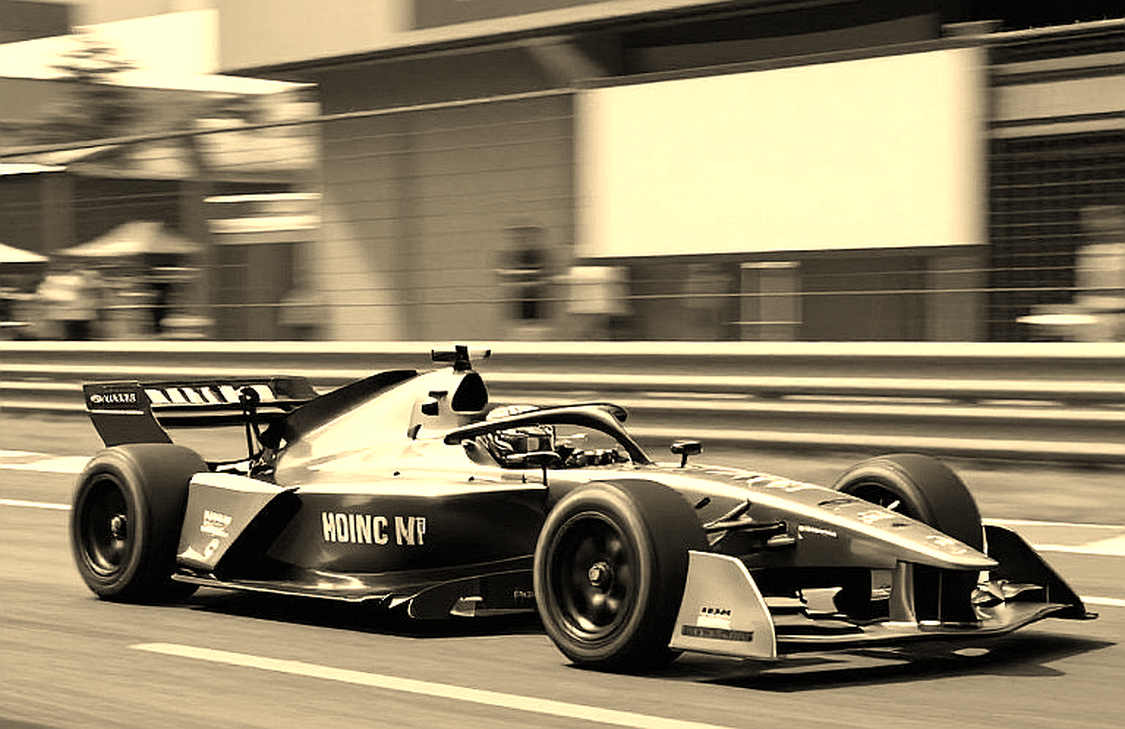
The car's dimensions are changing too. Width is reduced, wheelbase is shortened, front and rear wings are narrower, and the floor's ground effect is curtailed. The minimum weight target is a reduction of roughly 30 kilograms. Tyres stay at 18 inches but become narrower. The combined effect is not a slower car but a differently fast one — less grip in corners, more speed on straights, and more instability under braking.
Energy management: the new politics of the race
The real revolution is not in aerodynamics but in the power unit. The 2026 unit splits output roughly evenly between the internal combustion engine, at around 400 kW, and the electrical system, at around 350 kW. The MGU-H — the component that recovered heat energy from the turbo — is removed entirely, while the MGU-K's output is multiplied several times over. Fuel becomes fully sustainable, and fuel flow is now regulated by energy rather than by volume.
The result is that energy becomes an active variable across the entire race. Today a driver mainly manages tyres and fuel; in 2026 he will have to decide, lap by lap, where to spend energy and where to recover it. Spending energy for more speed on a straight may mean lift-and-coast to recover for the next corner, or harvesting harder under braking.
This is where a new competitive asymmetry appears. The team whose power unit can recover and deploy energy more efficiently will hold an advantage not only on the straights but across the whole lap time. And because that capability depends primarily on the power unit manufacturer's design, the gap becomes an external factor for customer teams — much as it did in 2026, when the spread between engine manufacturers at the start of the hybrid era proved far larger than the aerodynamic spread.
The biggest technical risk is that a car runs out of energy at the end of a straight. If that happens, the grid will show a strange paradox — a car that is fast because of reduced drag but slow in the final section because of an energy deficit. The regulators have accounted for this concern, but real behaviour will only be known from long runs on track.
The override state and the new logic of overtaking
The rules also contain a separate provision, generally referred to as an override state — when a car is within a defined margin behind a rival, it gets access to additional electrical power. This does not replace DRS, but it changes the logic of overtaking.
In the old logic, overtaking depended mainly on reduced drag and later braking. In the new logic it will depend on the energy reservoir. A driver who has saved energy across the lap can launch a decisive attack on the final straight — but if he has already spent it, he will have no means of defence left. This adds another layer to strategy: energy storage is now a race-level variable, like tyre management.
The reorganisation of power unit manufacturers
The 2026 season is also redrawing the map of manufacturers on the grid. Mercedes, Ferrari and Red Bull Ford stay with their power unit programmes; Honda supplies Aston Martin; Audi takes over Sauber and enters as a works team; Alpine is winding down its factory engine programme in favour of a customer power unit; and Cadillac joins as the eleventh team, having announced it will run with experienced drivers in Sergio Pérez and Valtteri Bottas.
The expansion is good news for the sport, but technically it has a clear consequence — a new manufacturer receives certain allowances at the start, and allowances mean that unequal rules will apply across the grid for the first few seasons. History suggests such allowances never fully equalise matters; they only determine how quickly a new entrant becomes competitive.
Resource asymmetry and the wind tunnel trap
In the cost cap era, technical advantage is built mainly from two things — the aerodynamic testing allocation and the quality of correlation. The allocation is distributed in reverse order of the previous year's constructors' standings, meaning teams further back get more wind tunnel and CFD time. In principle this compresses the gap.
But there is a large difference between principle and practice. More time does not mean a more correct direction. For a team whose wind tunnel data does not match its track data, extra time only generates extra confusion. In a transition year like 2026 that risk multiplies, because correlation models built on old experience simply do not apply to a new aerodynamic framework. Teams that have invested in their testing infrastructure over recent years may benefit; those relying on old models may pay heavily in the first few months.
The driver market: contractual uncertainty
A technical transition also affects the driver market, and this effect is often underestimated. When the car's behaviour changes completely, teams have no solid basis for judging which driver will be quick in the new framework. The result is that teams delay contract extensions, and the market enters a long pause followed by a sudden cluster of deals.
Drivers such as Max Verstappen, Lando Norris, Oscar Piastri, Charles Leclerc, Lewis Hamilton and George Russell are already on long-term contracts, so the main market activity will not revolve around them but around the midfield. For an experienced driver like Fernando Alonso, the new rules are both an opportunity and a risk — experience helps with energy management, but the physical demands and reaction-time limits are real.
Regulatory enforcement: the new geography of grey areas
Every major rule change brings regulators a fresh challenge — deciding where the letter of the rule ends and its spirit begins. The likely grey areas in 2026 are clear: the flexibility of active aerodynamic components, the behaviour of floor edges, the limits of energy flow measurement, and the conditions for using the override state.
Each of these areas carries the potential for intervention in the form of a technical directive, and every intervention means a performance loss for some team. That is why the number of protests rises in transition years. Cost cap and procedural breach cases have already demonstrated that compliance is not merely a technical matter but a management discipline.
Competitive forecast: will the gap close?
The most practical question is whether 2026 brings the grid closer. There are two arguments. The first says the new rules are a common starting point, so a large part of the big teams' accumulated advantage is cancelled out. The second says big teams have more engineers, better facilities and more effective management, so they will move ahead quickly under new rules too.
History offers examples for both. In 2026 the new rules took a small team like Brawn to the top, but within two seasons the big teams returned. In 2026 the new power units gave Mercedes a long advantage that no other team fully closed for several years. In 2026 the new ground-effect rules put Ferrari and Red Bull ahead, but within two years McLaren had reached the front.
The structure of 2026 is closer to 2026, because the entire power unit framework is changing. The most probable scenario is therefore that the first season tilts toward one manufacturer, and the gap narrows gradually over the following two. That is a clear strategic instruction for any team — more important than winning the first season is sustaining development momentum through the second and third.
Commercial dynamics and the investment question
A commercial shift accompanies the technical one. The entry or expansion of Audi, General Motors through Cadillac, Ford and Honda indicates that a framework built around sustainable fuel and electrification has become more useful to automotive companies. When the rules visibly connect to a road car programme, the investment case becomes easier — which is why manufacturer participation looks unusually strong in this cycle.
The arrival of an eleventh team cuts both ways. On one hand it makes the grid larger and the market broader; on the other it puts pressure on prize money distribution, pit lane space and logistics. These issues are usually resolved politically, and political resolutions often become entangled in the technical regulations.
What to watch next
The first signal will come from pre-season testing, where it will be visible which team can run consistently long stints and whose car loses energy at the end of a straight. The second signal will be drivers publicly complaining about energy management — if several drivers mention the same problem, it is a flaw in the rules, not a weakness in one team. The third will be the number of protests filed after the first race; that number runs high in transition years and indicates how large the grey areas are. The fourth will be the time spread between teams across the first four races — if it exceeds one second, the rules have widened the gap, not closed it.
Conclusion
2026 is a bet for Formula 1, and like any bet it carries both risk and opportunity. The intent of the rules is clear — to make cars lighter, more efficient and more competitive. But the intent of rules and the outcome of rules are not the same thing. What is certain is that next season will be technically more interesting than the last several. What is uncertain is who benefits. That question will only be answered on track — and only once a few races have been run.